



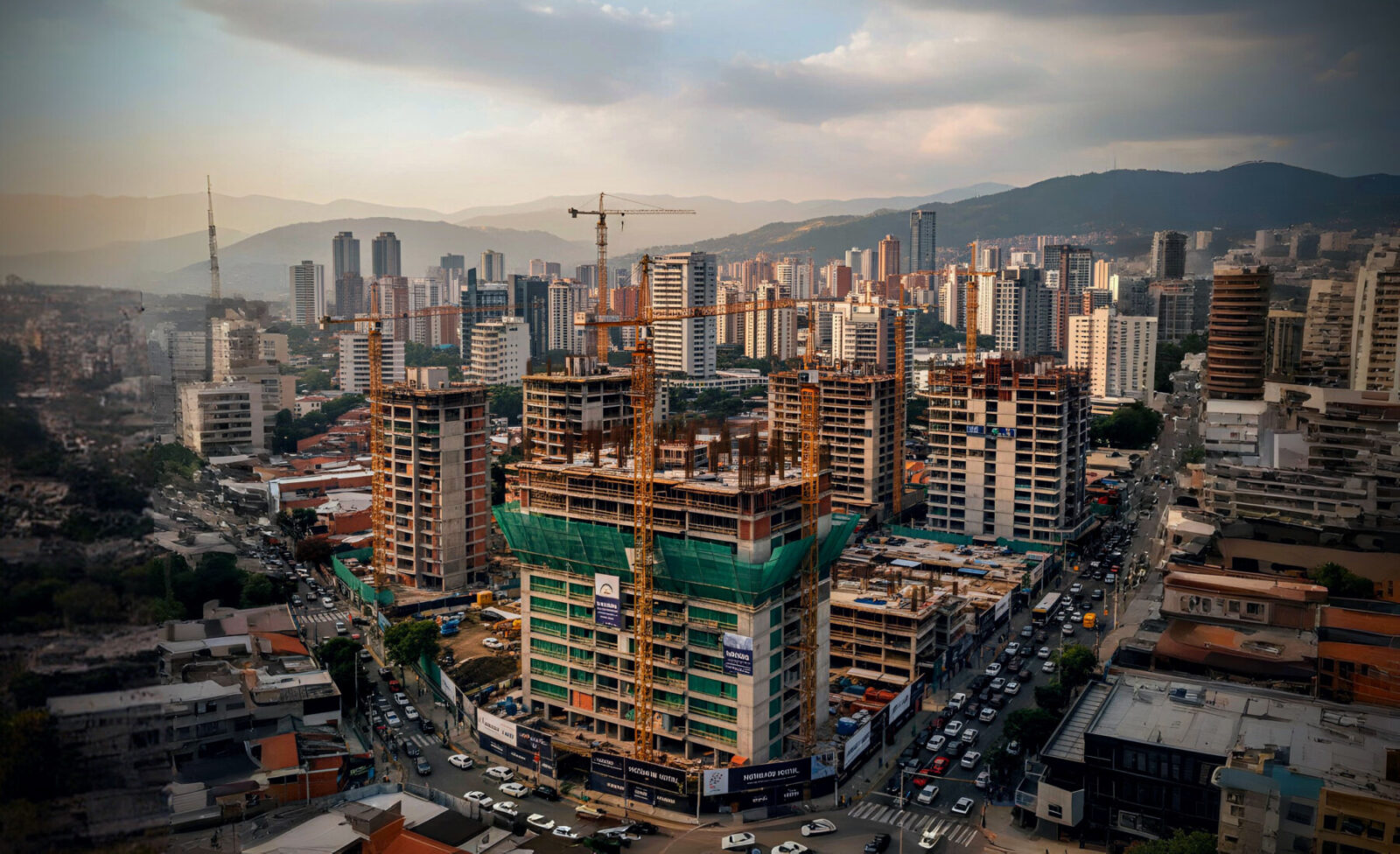
3,000 new hotel rooms are coming to Medellín. Too much supply?
 blackroom.com.coNovember 6, 20255 Mins read
Tourism growth is not enough when supply grows unchecked
In recent years, Medellín has established itself as one of Latin America's most dynamic tourist destinations. The figures confirm this: in the first half of 2025 alone, more than 950,000 visitors arrived, and everything indicates that the city will close the year with nearly 1.8 million tourists. However, while the number of visitors continues to rise, the number of available rooms has grown even faster.
In the coming months, Medellín will add more than 3,000 new hotel rooms. That represents between 45 and 75 additional hotels, depending on the size of each one. And most importantly, almost all of them are being built in the same areas—Laureles and El Poblado—where there is already a high concentration of supply.
This phenomenon sends a clear warning: there is no tourism crisis, but there is a silent threat of oversupply. A market can grow in volume, but if supply grows even more, profitability is diluted. Medellín is about to find this out.
Hotels built without validation or model
This is no secret: hotels are being built in Medellín simply because “many tourists are coming.” Surprisingly, and without the need for further information or validation, there are builders who believe that having a plot of land, a house, or an enthusiastic architect is enough to justify a multimillion-dollar investment, and then they launch themselves into the market without having analyzed rates, feasibility, without clear financial projections, and without the support of a hotel operator from the outset.
The result is a proliferation of projects that get started without knowing what their target market is, how much they should charge to be profitable, or whether there is really demand in that location for the product they have in mind. Architecture becomes the focus of the conversation, and it is mistakenly assumed that a beautiful building is enough to attract guests.
But a hotel isn't filled with design: it's filled with strategy. Knowing the acquisition cost of each customer, the right mix of rooms, the weight of interior design in the rate, and the operational logic that sustains the business is as important as the square footage. When these issues aren't discussed from the outset, what you're doing isn't building a hotel: it's gambling.
Competition becomes structural: price vs. value
The addition of 3,000 new hotel rooms not only increases the number of beds available, it also forces a redistribution of demand. And when supply grows faster than demand, the first thing to fall is the average rate.
Medellín is already experiencing a price war. Hotels with good facilities are offering rooms for 150,000 pesos a night. Others, in prime locations, are launching introductory rates below 180,000 pesos. The domino effect is clear: when high-end hotels lower their rates to maintain occupancy, they push the entire chain down.
The consequence is clear: maintaining profitability requires more than location and design. It requires operational efficiency, real differentiation, and a clear value proposition. It is no longer enough to simply be there; every penny charged must be justified.
Hotels that fail to maintain perceived value in the eyes of more informed, more demanding customers with more options will see their occupancy rates affected or will have to enter into a race to offer discounts that erodes margins and weakens the business.
Who will resist this new phase?
When supply meets or exceeds demand, a logical shakeout occurs in a market that is transitioning from emerging to mature. As has already happened in Bogotá and Mexico City, competition will eliminate the worst-performing hotels and consolidate those with vision, strategy, and disciplined execution.
Getting through this stage will depend on having done things right from the start:
- Projects with designs consistent with the operation.
- Location aligned with actual demand.
- Optimized cost structure.
- Financial models adjusted to the city's behavior.
- Operators involved from the development stage.
In addition, those who have the ability to convert their project into housing or another use will have a structural advantage. Flexibility of use will be a key factor in navigating this stage.
Medellín continues to grow: don't let improvisation slow down what has been achieved
This is not a pessimistic column. Medellín continues to make strong progress as a tourist destination. Investment in infrastructure, cultural events, the city's international reputation, and the response of the private sector have been key to positioning Medellín as a competitive destination.
The concern is not about demand, but rather how it is being addressed. Because if the city allows an improvised, unsustainable, and poorly planned hotel offering to take hold, it will ultimately affect the visitor experience and, over time, damage what has been built with so much effort.
Warning is not alarming. It is protecting an ecosystem that still has a lot of potential. If Medellín has proven anything, it is that it knows how to reinvent itself. But for that to remain true, we must understand that we are no longer in a gold rush phase. We are entering a phase of consolidation as a destination, and this requires serious execution.
Tourism continues to grow, and so does competition.
The arrival of new top brands such as Hilton, Mama Shelter, Click Clack Wellness, Wake BioHotel, and Swiss Hotel is raising the market standard. These chains don't improvise. They bring loyalty programs, international operating standards, and a robust business strategy. Their entry validates Medellín's tourism potential, but it also raises the bar for everyone.
In this new scenario, improvised hotels will find it difficult to compete. Hotels without a concept, without an experienced operator, without cost control, and without a sales strategy are doomed to compete on price at the low end of the market or to convert to something else.
The good news is that tourism will continue to grow. Medellín is an established destination with active demand. But the hotel business is now playing at another level, and only those who understand that competition is no longer about having beds available, but about delivering value, efficiency, and consistency, will achieve the most positive results.
Conclusion
Medellín is doing many things very well. Tourists are arriving, enjoying the city, and recommending it to others. The cultural, gastronomic, and entertainment offerings have grown alongside public and private efforts to consolidate Medellín as a world-class destination. None of this has been easy. It has all taken time, investment, and the occasional growing pains that are normal with growth.
That is why it is important to understand that although tourism continues to grow, the initial ‘gold rush’ of 2021 and 2022 is now over. Tourism is no longer a fad; it is a consolidated industry. And like any growing industry, there comes a point where supply and demand meet. This should not cause alarm; what lies ahead is not a crisis, but a period of greater demand. A period of competition where those who planned their hotels well, operate them efficiently, and deliver real value to both tourists and investors will stand out.
Finally, I want my message to be clear: 3,000 new hotel rooms do not mean oversupply or that opportunities in the hotel industry in Medellín are over. It means that what may possibly come to an end is improvisation.
Alejandro Gonzalez
Co-founder of Blackroom






Related Articles

The perfect storm in Medellín's hotel industry
I want to start this column by stating the obvious; that in every business...
blackroom.com.coMay 7, 2026 
The Medellín airport is finally going to be expanded... What now?
If you've been reading my articles for a while, you know that lately (on the contrary...
blackroom.com.coMarch 28, 2026 
The mistake no one wants to admit: Medellin builds more hotels than it can fill
What “El Colombiano” fails to see Today I read the column...
 Alejandro Gonzalez UribeFebruary 12, 2026


Hotel oversupply in Medellín. More tourists does not mean more reservations.
Let's make one thing clear: Medellín is not empty. Nor did it cease to be...
Alejandro Gonzalez UribeDecember 22, 2025 