




The mistake no one wants to admit: Medellin builds more hotels than it can fill
 Alejandro Gonzalez UribeFebruary 12, 20268 Mins read
What “El Colombiano” fails to see
Today I read the column of El Colombiano who speaks optimistically about the number of hotels being built in Medellín. More projects, more beds, more investment. The implicit message is that growth in numbers is always good news.
My question is another: why is no one asking how good it is? Since when is unlimited hotel construction synonymous with progress? Does more supply, by itself, mean a healthier market? I find it curious that 1,000 new rooms have come on line in the past year, that operators are feeling the rigors of competition, that more hotels are being announced, and that no one is questioning the future of the industry.
I think the folks at El Colombiano need to have a deeper conversation on the subject. I ask myself: Why not consult with industry leaders before celebrating the numbers? Why not ask those who operate hotels, those who face the margins and rate pressure, what is really going on?
If they did, they would probably hear something different. You would hear the story I am going to tell you in this article.
When opportunity turned to fever
Between 2019 and 2023 Medellín underwent an incredible transformation. The city went from being a destination that generated doubts to becoming an obligatory stop for thousands of foreigners. After the global enclosure of COVID, revenge tourism arrived with millions of people willing to travel, spend and experience new experiences.
Some developers and operators saw this phenomenon and we adapted quickly. Maybe because we were small and could move faster than the big construction companies. We did market studies, paid for international consultancies, analyzed the right scale to build independent hotels and understood something fundamental, that the hotel business is a hyper-specialized business with a complex system where every variable affects profitability, from the number of beds and the size of the room, to how the quality of the finishes impacts the rate.
We went out to say that there was a GREAT opportunity, we invited the whole city to invest in our projects, we showed our market studies and we also based our profitability figures on models reviewed by expert hotel operators.
What we did not anticipate was the backlash this generated.
Instead of investing in responsibly structured projects, many decided to copy the idea and build hotel projects on their own without any financial or hotel base. Behind this situation there is a phrase that I have been thinking for a long time that was the origin of the problem, a deeply paisa belief:
“In Medellín the best business is copying business”... because “If that guy could do it, anyone can.”
In some businesses that may be true. In hospitality, it simply isn't.
The culture of “if you want it, that's enough”.”
I know we have all noticed the same thing, in the last few years in Medellin hotels started to appear out of nowhere. Houses converted into lodgings and new buildings everywhere. The most difficult thing about this issue is that most of the new hotel projects have been designed by architects who had never done hospitality and by investors who had never thought about hotel flows, soundproofing, breakfast logistics or revenue management, and the worst thing is that many of them were never advised by an operator to validate the project or to help them structure a good profitability.
Hospitality as a guest may seem simple, but the reality is that it is a hyper-specialized industry. Faced with such large investments, you can't improvise and simply having the desire is not enough.
Many believed that it was enough to build a hotel in the house inherited from their aunt simply because they saw us talking about attractive returns. They mistakenly decided to get into the business without knowing and without backing, expecting to offer exactly the same, without having a financial model to back it up.
Some did not even structure a formal operation. No operator, no technical study, no serious break-even analysis. They went into business with the belief that tourism would continue to grow at the same rate and that there would always be someone willing to pay to stay in their hotels.
That is believing in infinite demand.
Demand is never infinite.
When copying destroys value
I want to make something very clear, the market studies that many operators and developers did before creating new hotel projects in the city, were serious studies that showed great growth possibilities. What they never projected was the avalanche of improvised supply that was going to enter the market, completely altering all projections.
These studies can estimate tourist growth, even project growth based on the capacity of structured companies in the market. What it could not measure was the number of people who, without experience, would decide to build so many hotels at the same time.
The result is what we see today: a lot of tariff pressure and competition, tight profitability and many projects that simply do not break even.
When a hotel is not clear about its cost structure, it has only one tool to compete: lower prices. And when one lowers its price, the rest are forced to react.
The guest does not distinguish between the hotel that made a study of USD 30,000 and the one that converted a house into a building and came looking for an operator 3 months after realizing that operating is not so simple. The guest goes to Booking.com, sees photos, sees location and sees rate. The rate ends up being the point of comparison.
And when the point of comparison is price alone, the entire market deteriorates.
The numbers that do not appear in the headline
Beyond perception, the data begin to show what many prefer not to discuss.
Hotel occupancy in Medellín, which reached levels close to 75%-77% in the years of greatest euphoria, has been falling to levels around 65%. In areas such as El Poblado the correction has been even more evident, which ends up affecting the other tourist areas of the city. Here I am not talking about a drop due to seasonal issues, I am talking about a pressure on occupancy as a result of the accelerated increase in the supply of rooms.
At the same time, the average rate stopped growing at the pace that many projected. ADR (average daily rate) stagnated, while the number of rooms continues to increase. And when the rate stagnates or declines and supply continues to expand, the result is simple: margins are squeezed... not to mention the extra pressure from minimum wage increases, but that's a story for another day.
In specific areas such as Laureles alone, close to 600 new beds have entered the market in the last year. In addition, almost 400 additional beds will be added to compete for a demand that is no longer growing at the same rate as in the post-pandemic euphoria stage.
When supply outstrips demand, players who do not have a solid supply and structure enter into a price war, increasing the pressure to achieve sales targets, and when the pressure increases, the market rewards not the most enthusiastic, but the most structured.
My part in this story
It is important for me to say that I do not write this from the comfort of external criticism. I write it from the inside, knowing every detail of the business and the industry.
Today I feel a certain moral responsibility for the current situation of the hotel industry in Medellín, for having promoted with so much energy and enthusiasm the narrative of the opportunity of investing in our hotel projects, without anticipating the number of people who would prefer to copy our business rather than invest in it. We believed in the city and its tourism potential... and we still do. But we did not anticipate that this enthusiasm would turn into massive improvisation on the part of so many builders.
Every time a poorly planned hotel opens or offers returns without a solid foundation, I can't help but think that at some point someone saw what we were doing, watched our videos and thought it was easy.
It is not.
The hotel industry does not forgive small mistakes. Poor soundproofing affects reputation. An oversized staff structure destroys margin. A miscalculated number of rooms changes cash flow. A project without an operator from the structuring stage has a high failure rate.
Hospitality may sell experiences but every decision must be based on mathematics.
And mathematics always wins out in the end.
It is not that there is no room. It's that there is no room for improvisation
If you have reached this point you are probably asking yourself: So, shouldn't there be more hotels in Medellín? The truth is that Medellín still has room to strengthen its hotel industry, especially the institutional one. Although the independent hotel industry is in high competition and supply is outstripping demand, there is still room for institutional hotels (international brands) projects with structure, with global brand, with standards capable of raising the average rate of the destination and order the competition. This type of investment would not affect the market: it would give it discipline.
The problem is not the arrival of new hotels. The problem is the proliferation of small, independent and inexperienced projects that compete solely on price because they have no other tool.
That's why I insist on something that may sound provocative: Medellín does not have “.“Hotel ”tourism boom. It is saturated with unorganized and inexperienced supply. And that is not the same.
Today the hotel market is maturing and when a market matures it stops rewarding enthusiasm and starts rewarding structure. Economic cycles do what they have always done: they correct.
Some assets will be reconverted. Others will seek the backing of an international brand to protect their cash flow. And some will simply not hold up.
It is not pessimism. It is the way markets eliminate improvisation and force professionalization.
The lesson to be learned
Medellín was right to believe in its tourism potential. What it did wrong was to confuse potential with permission to do anything.
No, it is not a mistake to bet on tourism. The mistake is to assume that every project was viable just because the flow of foreigners was growing. Believing that demand was infinite was naïve and believing that the hotel industry was an easy industry to operate was, in many cases, irresponsible.
Entrepreneurial ambition is necessary in a city that wants to grow. But ambition without structure and knowledge ends up damaging the very market it seeks to tap.
If Medellin wants to consolidate itself as a serious international destination, it will have to rethink its hotel industry. Looking for alternatives for those projects that simply do not and will not meet the expectations of its investors. What worries me is that I know stories of hotels that today have been going for months or even years without breaking even and taking on debt in order to survive, and they are not few, they are many.
Tourism may continue to grow, especially if the Rionegro airport is expanded or more concerts are held. But all these are wishes and not certainties, the certainty is that the city reached a point where the growth of tourists is slowing down and stabilizing and for that amount of tourists is that all the hotels that exist today plus those that “El Colombiano” says will arrive will have to fight.
And that adjustment, although many do not want to see it, has already begun.
Alejandro Gonzalez
Founder of Blackroom





Related Articles

The perfect storm in Medellín's hotel industry
I want to start this column by stating the obvious; that in every business...
 blackroom.com.coMay 7, 2026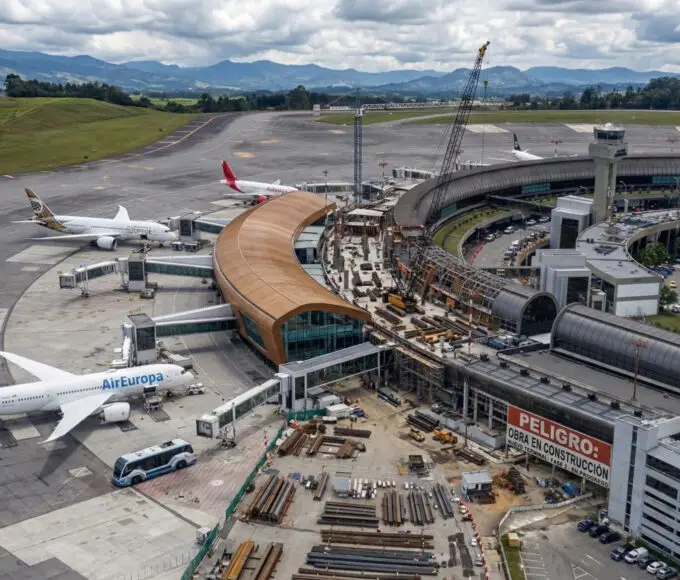
The Medellín airport is finally going to be expanded... What now?
If you've been reading my articles for a while, you know that lately (on the contrary...
blackroom.com.coMarch 28, 2026 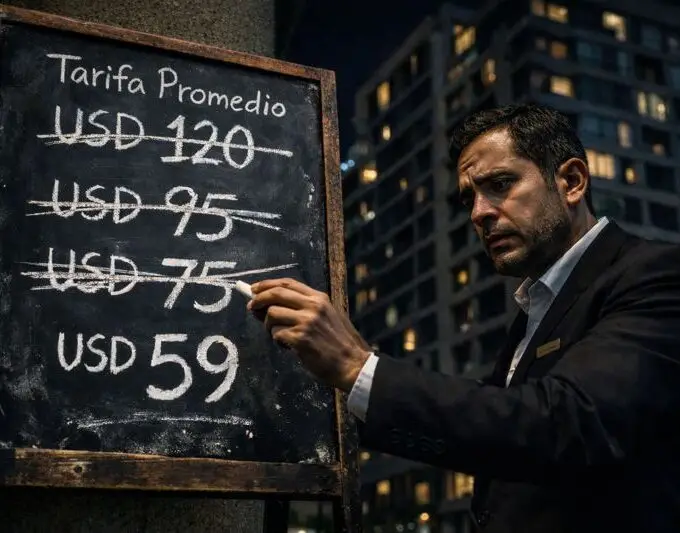
Hotel oversupply in Medellín. More tourists does not mean more reservations.
Let's make one thing clear: Medellín is not empty. Nor did it cease to be...
Alejandro Gonzalez UribeDecember 22, 2025 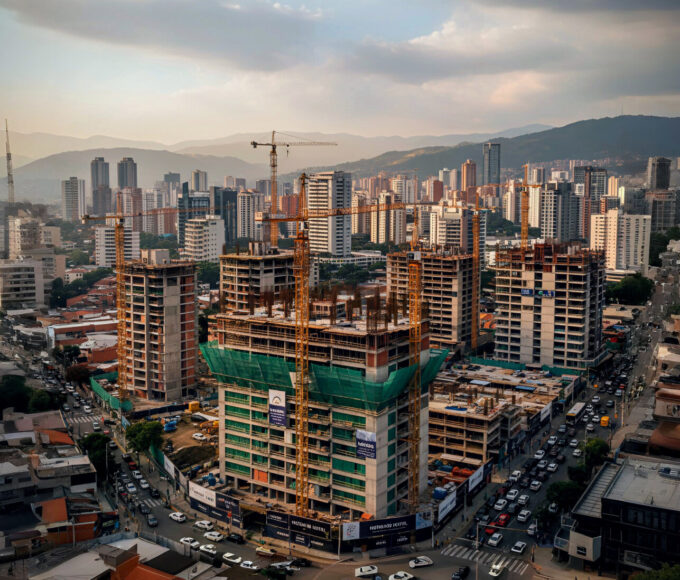


3,000 new hotel rooms are coming to Medellín. Too much supply?
Tourism growth is not enough when supply grows unchecked During...
blackroom.com.coNovember 6, 2025 