



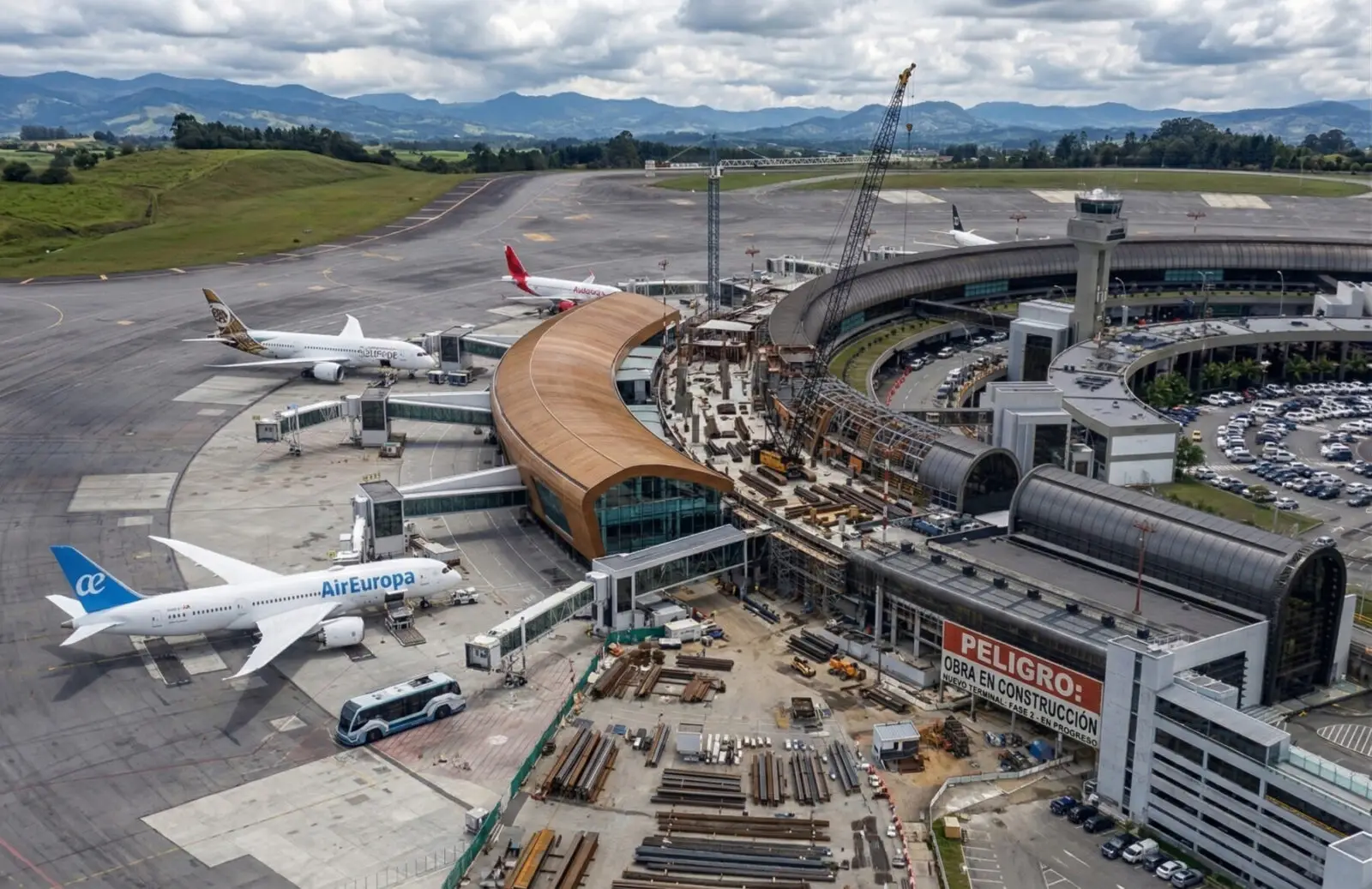
The Medellín airport is finally going to be expanded... What now?
 blackroom.com.coMarch 28, 20267 Mins read
If you have been reading my articles for some time, you know that lately (contrary to the traditional press that only looks at the surface) I have not exactly been optimistic about the current hotel market in Medellín. I told you that more hotels were being built in the city than could be filled. That 3,000 new rooms were coming to a market that has been feeling the rate pressure for some time now. That the rate war had begun to damage many business models and that projects without a clear structure or value proposition were going to pay dearly for it. All this is still true today.
But this week (Incredibly) something happened that we had been waiting for years to happen: the National Government signed an Otherí that was necessary and was blocking the expansion works of the José María Córdova International Airport that were and are so necessary. And although this does not change the short-term outlook for the hotel industry, it does change something important: for the first time in months, the market has a visible growth horizon.
I want to explain why this is so important, and also why we should not get too excited... for the moment.
What happened, and what should have happened months ago
As reported by Councilman Alejandro De Bedout and important media in the country, Otrosí 27 had been ready since December 26, 2025, the technical studies were ready and the design of the works had already been delivered by Airplan some time ago. In addition, ANI's contracting committee had given its approval and, most importantly, the investment had already been fully secured by the private concessionaire, without costing the national budget a single peso. The only thing missing was the government's signature.
Strangely enough, the firm did not even arrive with the money ready, and while the Ministry of Transportation, the Government and ANI were throwing dirt on each other, they spent months and months blocking a simple signature to improve the conditions of one of the most important airports in Latin America. Let's remember that today the airport serves 14.5 million passengers in a terminal designed for 11 million, with operations almost collapsed.
What I find hard to believe is that if the investment was not going to be made by the State but by Airplan, which already had the money ready, how the fuck can a signature take three months to arrive without anyone explaining why. Thank God, on March 26, they finally signed. I am very happy because in our city both the private and public sectors have invested a lot in infrastructure and this airport issue represented a big bottleneck.
Why was the airport the bottleneck?
When in previous articles I talked about oversupply and a maturing market, there was always an implicit bottleneck that I didn't quite solve: the airport... I didn't solve it because I'm not one to focus on things I can't control.
The expansion of the airport (which will be partial and not complete) was and is the golden key that opens the doors to Medellín's expansion as a global tourist city. The logic is very simple to understand, if the demand cannot grow because the airport does not give more (more people cannot arrive), then the oversupply of hotels that today generates all the rate and occupancy pressure in Medellin would not have a solution beyond the market regulating itself, causing those that are doing the worst to go bankrupt and close down.
Today, with this news, the future outlook changes completely, although I want to make it clear that in the short and medium term the pressure will continue, at least until the works progress and the airport begins to receive more passengers.
What these works are and what they are not
The approved works are a shock plan, not the definitive solution. It is important to understand this well.
$167 billion in 11 comprehensive interventions and 15 one-time actions: new waiting rooms, six additional boarding gates, 24 new check-in positions, improvements in security filters and more streamlined immigration processes. The projected result is to increase annual capacity from 11 to 17 million passengers and from 24 to 38 air operations per hour.
They say that the execution period is 12 months (I put it at 16 months if we are on schedule), which means that we would be talking about an airport with greater capacity operating by the third quarter of 2027.
But Alejo... What about the second clue? I did not ask myself that I am not a politician!
What is said is that the second runway would take the airport to 40 million passengers and that experts consider necessary for the long term of the city. The thing is that this work costs $22 billion that no government has committed and that hardly after this improvement someone will commit. So the scenario we have to play with is the one we have today.
What changes for the hotel sector and what does not.
To be honest, not only will these works not solve the oversupply until a year and a half from now, but due to the works, they will surely complicate the situation even more in the short term. The 3,000 new rooms that are coming will open while the airport is under construction, probably serving fewer flights. Besides, the rate pressure will not magically end because the Government signed an additional agreement for a construction work. The hotel industry, which today is feeling the pressure of the market, will not improve overnight just because the airport expansion was approved; in fact, I dare to say that the industry will feel a little more pressure during this period.
What does change positively is the possible increase in potential demand.
Medellín today has an extraordinary tourist demand considering the limitations of its airport. In 2025, more than 2 million foreign tourists will arrive with a terminal operating 30% above capacity. When that capacity increases, demand has room to grow. And when demand grows, the city's hotels have the opportunity to capture that growth without getting into the price race.
The only change that will happen for Medellin's hotel industry overnight is that we already know which way the wind is going to blow. In the past it was about holding on and waiting for the worst players to blow up and exit the market. Now it's about holding on knowing that the future holds the promise of growth.
Medellín is an example of resilience
There is something I want to keep in the middle of all this analysis.
Medellin's tourism was not built by the National Government. It was built by those of us who conducted market studies when no one was asking for them, those of us who structured serious hotel projects when the market was not yet demanding them, those of us who endured years of rate pressure without letting go of our value proposition. We built it among entrepreneurs and investors, who bet on this city when betting was a risk, and the local government that has not tired of putting all its efforts to improve infrastructure and security.
Medellín surpassed Cartagena as the second destination with the most international arrivals in Colombia. It grew by 11.7% in foreign tourists in 2025. All of this with a burst airport and a government that made the glasses in many moments in immigration and also took months to sign a paper that did not cost anything to sign.
What has just happened is that, at last, the infrastructure is beginning to catch up with the city that we have built among all of us who love it so much.
Conclusion and final message
I want to end with a direct message to investors and hotel operators who have been at this for some time.
Those of us who bet on this city and took seriously the market studies necessary to invest in it, knew that this expansion would come sooner or later, and not because we were some kind of naïve optimists or worse, but because the market data was clear and we could see it coming that the airport would have to be expanded and renovated in the short term.
The flow of tourists growing by 20% per year in a sustained manner for more than 6 years made it more than evident. This and the exodus of people to live in the east is why they built the mega tunnels to the airport, and for the same reason the second tunnel was built years ahead of schedule and is almost finished. These types of infrastructure decisions are not taken lightly, much less by private investors, as was the case with the tunnel. The signs were always there for those who wanted to see them. It is clear that this work is not the second runway or the $22 billion expansion that many of us expected, but without a doubt this strategic work will unlock the airport to 50% more of its capacity and that will bring the projections back to what they were.
The lesson we have learned is that in life, no matter how much you study and plan things, sometimes plans do not come out exactly as you want them to, times are running out, signatures are delayed, bureaucracy does its thing. But almost always, when the studies are serious and the government ends up keeping its own promises, the projections end up happening.
Today we see the future that we have been waiting for years, for which we plan and for which we will work tirelessly to continue growing and making Medellín the best tourist destination and place to live in our country.
Alejandro Gonzalez
Co-Founder Blackroom Hotel Operator


Related Articles

The mistake no one wants to admit: Medellin builds more hotels than it can fill
What “El Colombiano” fails to see Today I read the column...
 Alejandro Gonzalez UribeFebruary 12, 2026
Hotel oversupply in Medellín. More tourists does not mean more reservations.
Let's make one thing clear: Medellín is not empty. Nor did it cease to be...
Alejandro Gonzalez UribeDecember 22, 2025 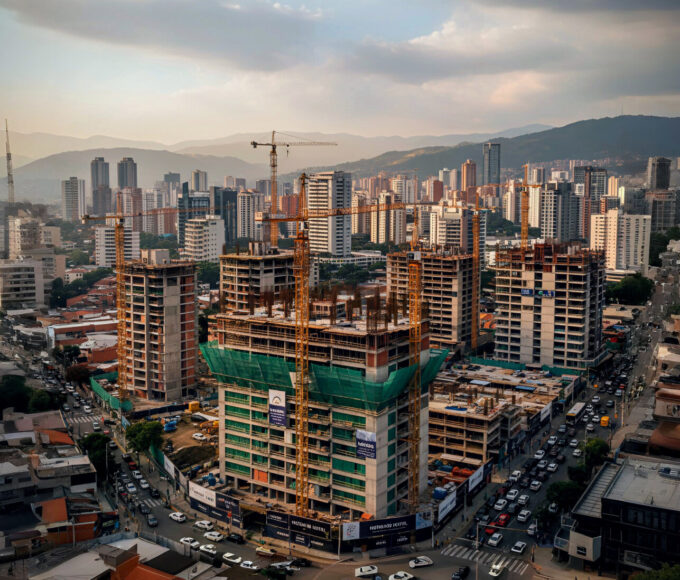
3,000 new hotel rooms are coming to Medellín. Too much supply?
Tourism growth is not enough when supply grows unchecked During...
blackroom.com.coNovember 6, 2025 


Rate war: This happens when Medellín becomes flooded with hotels and Airbnbs without any control.
Medellín continues to grow, but the market has changed. Hotels...
Alejandro Gonzalez UribeSeptember 11, 2025 