



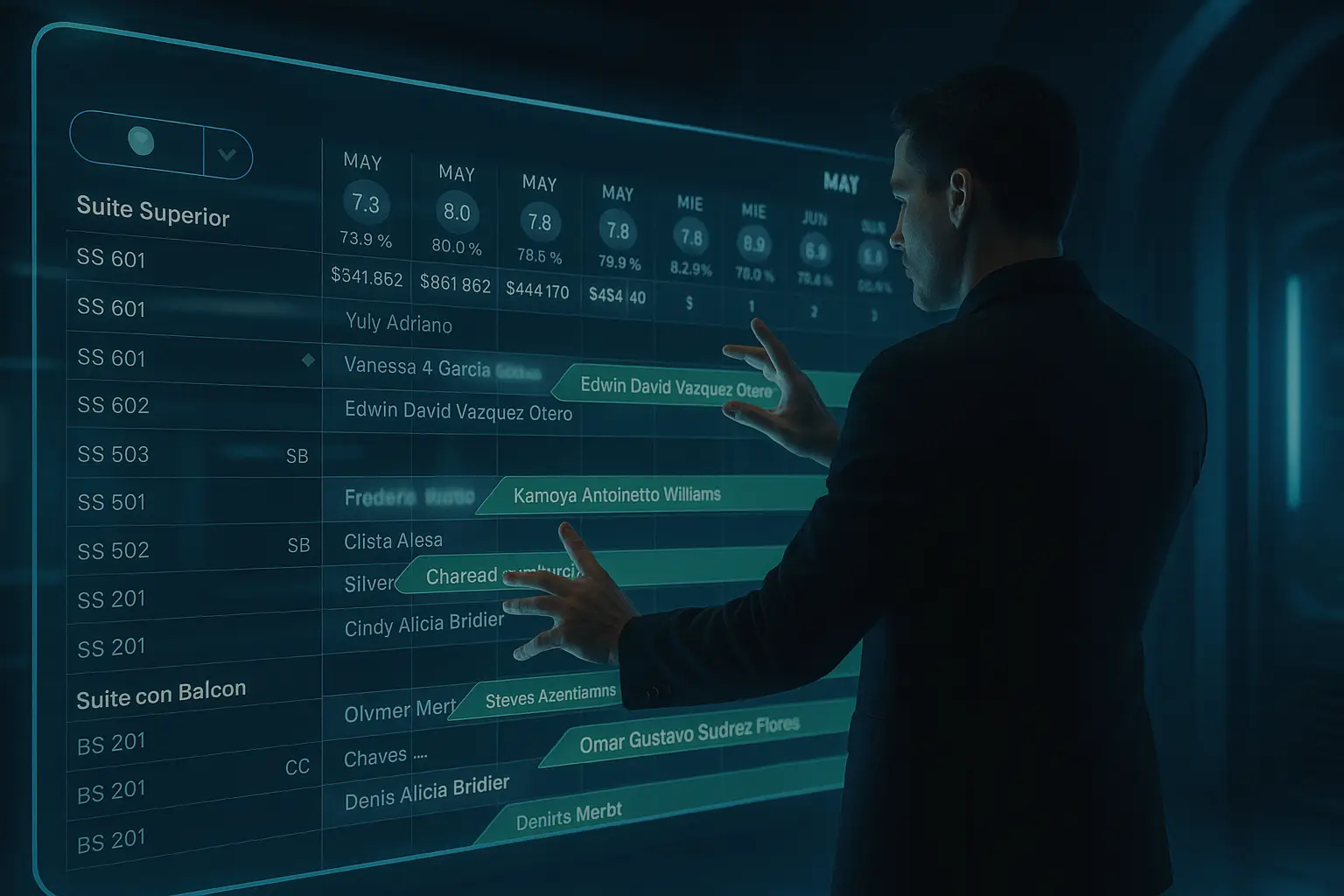
How to improve hotel occupancy: 10 effective strategies to increase bookings
 blackroom.com.coJune 22, 202510 Mins read
If you are reading this article, it is probably because you are not achieving the best occupancy rates and are looking for the magic formula from an experienced operator. If so, I have some good news and some bad news. The good news is that there is always room for improvement in any hotel's occupancy rates, as they can be optimized through operational, commercial, and technological adjustments.
The bad news is that a significant part of the occupancy ceiling for most hotels is already defined from the outset, even before the hotel is built, and unfortunately, those decisions cannot be changed.
1. The uncomfortable truth: occupancy is decided before opening
This is where the part begins that many would prefer to be able to rewrite. The decisions that determine a hotel's success are not made when the first guests arrive, but much earlier, when it is still just a blueprint on the table: location, market niche, size, type of rooms, overall aesthetics, interior design, amenities, and target audience. A hotel can have a spectacular lobby and fail because of claustrophobic rooms. It can have the best rooms and go bankrupt because of a poor location.
When these errors exist, sometimes even the best operator cannot resolve them. Minor tactical maneuvers can be applied, but reversing structural decisions is technically complex, financially risky, and, in many cases, simply impossible. That is why consulting with experts from the planning stage is not a luxury, but a sensible investment. A hotel is, from the outset, a high-cost project; building it on strategic errors is the fastest route to future operational problems.
Occupancy dynamics also vary depending on the type of hotel. An urban hotel can maintain good occupancy levels during the week, driven by corporate demand, but still suffer from seasonality throughout the year. In contrast, a rural hotel or glamping site depends much more on weekends: its clientele are people from nearby cities looking for short getaways, but during the week, when most people are working, it is difficult to maintain high occupancy.
With that said, let's begin:
2. OTAs: standing out is what sells, not just being there
For most hotels, OTAs (Online Travel Agencies) are the first point of contact with customers, especially hotels in major cities and business hotels. But simply being on OTAs does not guarantee reservations. The platforms do not present all options equally. The options that guests see are determined by each OTA's algorithm.
It must be said, the algorithm is demanding. It rewards hotels that maintain rate parity across channels, update inventory in real time, respond quickly to guest requests, resolve conflicts efficiently, accumulate recent positive reviews, pay agreed commissions on time, and above all, keep their profile up to date. This is the minimum you must do if you want to position your hotel.
To all this we can add a more direct—and costly—form of positioning: internal advertising within the platform itself. Used well, it allows you to gain positions quickly. Mismanaged, it only increases spending, even with consistent reserves.
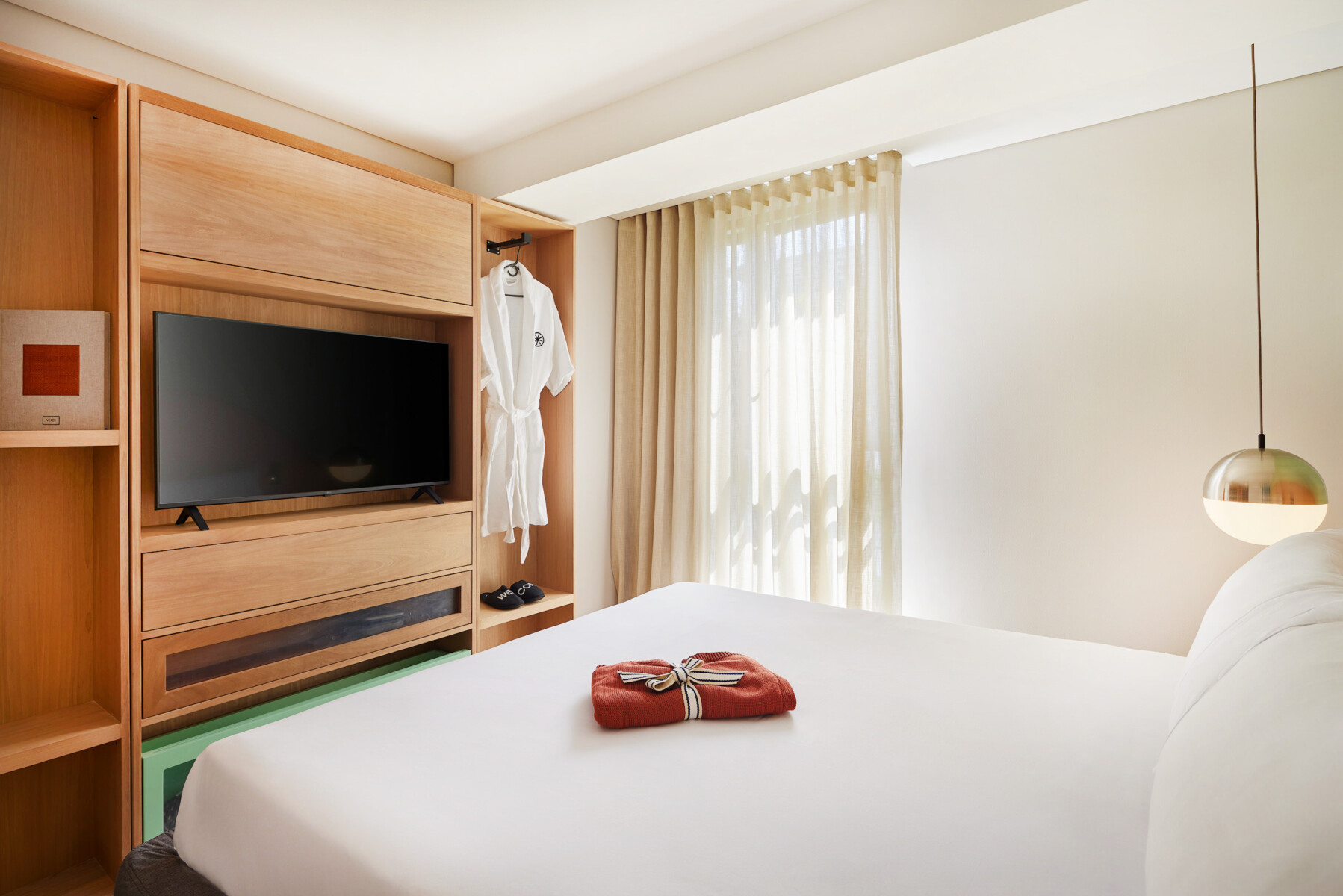
3. Professional photography: the filter that determines whether you get booked
Let's be realistic, everything enters through the eyes. Photos are not just filler: they are a hotel's first selling point. Before analyzing prices or reviews, customers form their initial impression based on what they see. A well-produced visual gallery, showing real, well-lit, and attractive spaces, is the filter that determines whether or not the hotel is considered, and if you pass the consideration filter, then it will determine, based on your photos, whether it is worth paying the price you are charging.
Dark or blurry photos, poor framing, or generic images cause customers to dismiss the hotel before even reviewing other details, even if they are very good. No one is going to book a place where they think spending the night will be a negative experience. Photographs are, literally, the first line of revenue management.
4. Hotel revenue management: the daily barometer of demand
Revenue management is, in essence, the daily pulse of occupancy. Adjusting rates is not a one-off task, it is an ongoing obligation. But it is not about reacting to what is happening today, it is about anticipating what is coming. This is where a concept that many people forget comes in: the booking window. Most hotel reservations are not made for the same day, but days, weeks, or even months in advance, depending on the type of hotel and the market.
If a hotelier is adjusting prices to fill today's rooms, they've probably already lost the game. Effective revenue management looks at the future booking curve, detects patterns of anticipation, evaluates the speed of sales, and adjusts to maximize future occupancy, not just immediate occupancy.
The temptation to automate everything is great, but dangerous. Systems provide data, not decisions. Adjusting prices out of fear of seeing empty rooms today often ends up eroding the perception of value tomorrow. Sustainable occupancy is built when prices reflect market intelligence and foresight, not last-minute commercial anxiety.
5. Digital presence: verify that the hotel exists
Guests are wary, especially when it comes to independent hotels. A digital presence is not necessarily about gaining followers; it is about demonstrating professionalism and projecting confidence. An up-to-date website, active social media profiles, and verified reviews are basic evidence that the hotel exists and operates seriously.
In urban hotels, where guests usually stay for specific reasons and rarely return within six months, it is unlikely that they will decide to follow the hotel on social media, especially if it is not an experiential resort. In these cases, the function of social media and the website is to validate the existence of the business, not to create a community.
On the other hand, in glamping sites, rural boutique hotels, or experiential destinations, social media does have a direct influence on occupancy. There, attractive visual content and digital interaction build desire and fuel the purchasing decision.
The key is to understand what each channel is for. In some cases, it validates; in others, it sells.
6. Digital advertising: segmentation or waste
Investing in digital advertising without a clear strategy is financing the competition. In rural destinations, glamping sites, or experiential hotels, social media works well because it is inherently georeferenced, which means that its reach is more likely and efficient within a few miles of where it was published, allowing you to reach a nearby audience. Similarly, this georeferencing makes the advertised content less efficient when the customer could be anywhere in the world, making it difficult to be effective with the ad, or when in countries with stronger currencies, making the ad much more expensive.
It is clear that visual content inspires, creates desire, and drives bookings. In the rural hospitality sector for the local market, well-targeted social media advertising has a direct impact on occupancy rates, delivering efficiency and a good return on investment.
On the other hand, when the target market is in another country or in remote areas, advertising on social media becomes more expensive and less efficient. That's where Google and metasearch engines come into play: the user already has a clear intention to purchase, searches for dates, and compares options. First, the intention appears on Google, then the remarketing campaign can optimize the conversion.
Confusing these scenarios is what leads to wasting budget without changing occupancy.
7. Offline channels: how to take advantage of agreements that continue to work
Offline channels remain a valuable source of occupancy if managed with discipline. In the corporate segment, the key is to identify local companies, approach their purchasing or human resources departments, and negotiate preferential rate agreements. These agreements are difficult to achieve, as they are almost always reserved for traditional chains, but if obtained and well managed, they can help improve occupancy throughout the year.
Tour operators continue to generate significant volume. Participating in tourism fairs can help you establish a presence on their platforms and build advance booking agreements, which can help generate flow during key seasons, although results are never guaranteed. These efforts, when done well, increase the likelihood of filling inventory on strategic dates.
Agencies often serve relevant niches: group tourism, seniors, travelers seeking personalized itineraries. Cultivating relationships with these agencies can bring in bookings that, for various reasons, would not otherwise be made through OTAs.
Finally, local events—conferences, concerts, sporting events, or festivals—create peaks in demand that require advance planning. Identifying which events fit your hotel's profile and establishing relationships with organizers can be a great help during key dates.
8. Loyalty: turning guests into repeat customers
In the hotel industry, there is a lot of talk about loyalty, but little nuance about its true nature. Guest loyalty is not an automatic result, nor does it respond to universal formulas. It depends—like almost everything in business—on context.
In rural hotels and glamping sites, where the experience is intimate and human contact is central to the product, loyalty can be built on personal relationships. There is no need to compete with OTA algorithms or large digital advertising budgets. The key here is to know each customer's travel patterns, identify the right moments for a direct offer—holidays, long weekends, low seasons—and offer reasonable incentives: upgrades, measured discounts, additional experiences. The important thing is not the size of the benefit, but the timing and personalization. Each repeat visit reduces the cost of acquisition and stabilizes revenue flow.
The scenario changes in urban hotels with a corporate and international profile, as is the case in Medellín. There, direct loyalty finds its natural limits. International guests rarely return to the same destination in the short term, and if they do, they tend to diversify their experience. Corporate clients, for their part, prioritize global chains that guarantee continuity between cities and lax financial conditions: payments at 30, 60 days, or more. The latter represents a serious challenge for the cash flow of independent hotels.
Therefore, in these cases, direct loyalty has a limited margin. The challenge is more strategic: transforming each stay into an experience that is satisfying enough for the guest to recommend the hotel, leave a positive review, or refer others. A customer's recommendation is a form of indirect loyalty that transcends their individual return.
Loyalty, in the end, is about turning a guest's first stay into many more.
9. Smart packages: stimulate bookings by creating better offers
Offering packages—tours, wellness, gastronomy, unique experiences, room upgrades, early check-in, late check-out—is not intended to increase the base rate, but rather to encourage the decision to book. By presenting guests with a set of additional benefits at an attractive price, you create the feeling that they are getting more value for their money. And remember that the occupancy game is won by projecting yourself as the most valuable option vs. the guest's budget.
Furthermore, depending on the type of package created, packages allow guests to extend their stay or increase their consumption during their visit by integrating services that they might not otherwise have considered, such as dinner, a massage, or a walking tour. It is not a question of charging more for the same thing, but rather of offering more for what the guest was already willing to pay.
Well-designed packages create a positive perception before booking and enhance the overall experience, but their effectiveness varies depending on the type of hotel. In rural or getaway destinations, packages often include experiential activities—such as hiking, themed dinners, or local tours—that encourage longer stays. In urban or business hotels, on the other hand, packages work best by adding value in functional services: room upgrades, early check-in, late check-out, or small convenience benefits. In both cases, an attractive package can tip the booking decision and fuel the hotel's positive reputation.
10. Integrate with larger operators: try to grow without losing your identity
When an independent hotel exhausts its individual commercial strategies, there is one alternative that many underestimate: joining a larger system. Affiliating with a chain or operator with a white label model provides access to marketing expertise, consolidated databases, existing corporate agreements, loyalty programs, and commercial platforms with greater reach.
The key is to do so without losing the essence of the hotel or paying high fees for the right to have a nice name. Nor is it a simple marketing strategy, but rather a matter of starting to operate with a commercial and administrative infrastructure that would be very expensive to build independently.
A good multi-hotel operator, managing several assets under flexible models, can add scale, volume, and operational consistency without diluting the unique experience of each property.
In many cases, this integration is the most effective way to stabilize occupancy and reduce exposure to individual commercial risk, but it also exposes the hotel to a new type of challenge: the operational learning curve. Integrating into a larger system requires adapting to new standards, business methodologies, and administrative processes that, if not mastered well from the outset, can lead to internal friction and efficiency losses during the transition.
Conclusions
Hotel occupancy depends on many variables, but interestingly, all of them fall within the limits established by the project itself from its inception. Location, size, number of rooms, design, and value proposition define the hotel's potential, and daily operations will simply seek to achieve it.
That's why occupancy management is not a matter of improvisation. It is a disciplined task where revenue management, professional photography, guest management, operational teams, digital segmentation, corporate agreements, and loyalty programs become tools that, when applied correctly, add every available percentage point toward achieving the goal.
Even well-designed hotels require experienced operators who can read demand, anticipate needs, and execute with precision. The good news is that there is always room for improvement. The key is knowing how to manage tools intelligently and recognizing when it is time to seek support to scale up.
Alejandro Gonzalez
Co-founder of Blackroom






Related Articles
The art of investing in hotels without losing sleep: 10 recommendations from a trader
You invest better when you understand what you are getting into. And the...
 Alejandro Gonzalez UribeAugust 4, 2025
Is an Airbnb in Medellín better business than a hotel?... Just like smuggling is "better business" than complying with the law.
Surely you saw the news in "El Colombiano" that Medellín has just entered...
Alejandro Gonzalez UribeJuly 24, 2025 
End of illegal Airbnb? How the new national regulation for tourist housing in Colombia will work
Four words sum it up: coexistence, responsibility, equity and control. Colombia cannot...
Alejandro Gonzalez UribeJuly 9, 2025 


Which hotel operator to choose in Colombia if you are an investor?
Many investors see an attractive opportunity in the Colombian hotel industry: tourism in...
Alejandro Gonzalez UribeJune 5, 2025 
Leave a comment