



Tourism in Colombia: the paradox of a record without help from the national government
 Alejandro Gonzalez UribeAugust 27, 20255 Mins read
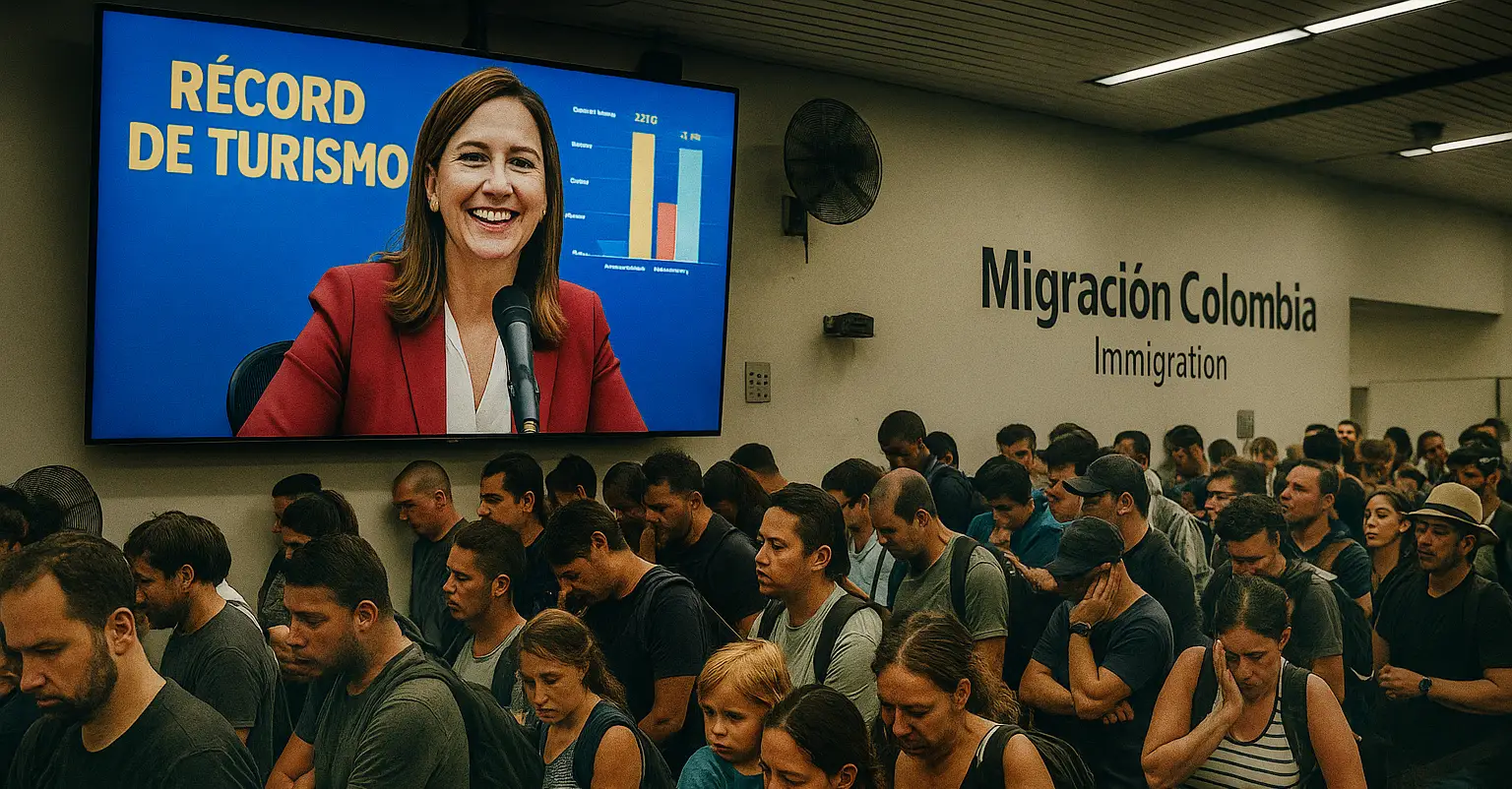
While the Ministry of Commerce celebrates record tourism revenues—more than 3.2 million non-resident visitors and a projected US$11.3 billion in 2025, according to Minister María Ximena Lombana—the mayor of Medellín, Federico Gutiérrez, has a more pressing concern: José María Córdova Airport, Antioquia's main international gateway, is overwhelmed due to a lack of immigration personnel.
Seeing these two news items on the same day leaves me with mixed feelings. Either we are growing with more luck than structure, or we are wasting an opportunity that could be much greater. Because from where I stand—as the founder of a hotel operator who works every day on the potential of this industry—it is strange that we are breaking records in a sector where many basic things still do not work as they should.
Tourism grows from the local level
The national government talked about turning Colombia into a tourist powerhouse. But the facts point in another direction. With things like: the reinstatement of full VAT on airline tickets and hotels for Colombians, the diplomatic crisis in January this year with the United States—the country that brings us the most tourists— the persistence of unnecessary bottlenecks such as those caused by Migración Colombia at airports like Medellín, and the debacle that San Andrés has been suffering for several years now, I still cannot understand how they are able to celebrate the tourism growth figures as if they were a direct result of the central government's management and not what they really are.
What really explains the country's tourism growth is something much simpler: cities simply decided to take matters into their own hands. Regions committed to tourism in a country where securing investment has not been easy, but is urgently needed.
Both local governments and the business community decided to invest in tourism without waiting for conditions to be ideal and without anyone giving them any guarantees. And the results we are seeing today are because, despite everything, they got to work instead of waiting for the central government to deliver on promises that, at the end of the day, have remained just that: promises. I think it is no secret that today's success is due to the fact that a comprehensive and competitive tourism offering has been developed in key cities across the country.
Leadership, continuity, and territorial investment
If this country has proven anything, it is that Colombians who see an opportunity seize it. We don't wait for ideal conditions, nor do we need you to give us anything. If we see a chance to grow, even against all odds, we will work from dawn to dusk to make it happen. For this simple but important reason, some cities have managed to move forward: because they didn't wait for instructions or subsidies, they took action.
The best example of this is Medellín. When the private sector and the mayor's office align themselves behind a shared vision, the results are clear to see. You can see the investment, the strategy, and the shared desire to compete. And competing, in this case, is not just about attracting visitors: it's about offering a city with history, entertainment, gastronomy, infrastructure, education, and now even an artificial sea. That can only be achieved through hard work and a desire to succeed.
Cities that do not grow do so not because they cannot, but because I believe they do not want to change, or at least do not know how to do so. What is clear is that they do not think of themselves as tourist destinations nor do they take their own potential seriously. Tourism is a supply-driven industry, and supply must be thought out, built, and worked on. Those that have done so are now reaping the rewards of that work.
Persistent challenges, local responses
The contrast is inevitable. While some cities such as Cartagena, Medellín, Santa Marta, and the coffee region are consolidating their tourism offerings, others have not even begun to compete. The worrying thing is that, at the national level, there is no clear focus on growth that would help consolidate those who are growing or help those who have not yet started to take off.
One notable case is that of migration infrastructure, which is not keeping pace with the country's tourism growth. You have probably seen the video in which Federico Gutiérrez (the mayor of Medellín) not only denounces the bottleneck caused by Colombian migration at Rionegro airport, but also highlights the national government's lack of resources and willingness to develop tourism. And rightly so: how can we expect to grow as a tourist destination if the visitor's first contact with our country is an endless queue due to an obvious lack of staff?
The positive thing is that, faced with these less than ideal situations, the response of the private and public sectors in the regions has been to continue moving forward despite the limitations. Although Minister Lombana tries to take the credit by saying that “these results reflect the commitment of all actors: the private sector, local governments, and communities,” many of us are already clear that all the achievements have occurred despite the central government's lack of will and execution.
The opportunity to articulate a common vision
Colombia has already demonstrated that it has cities capable of driving the tourism industry without relying on a major national strategy. However, this model alone will only scale up to a certain point. We need coordination, opportunities for collaboration between regions, and, above all, tools to ensure that what already works does not remain isolated and that new cities and regions can join in offering a more comprehensive tourism experience as a country.
The plan has always been to stop thinking of tourism as a mere option and start seeing it as a fundamental part of the country's economic infrastructure. We always talk about Colombia as the best place to live in the world, but the thing is, if we look at it closely, the best place to live in the world would never overlook tourism.
We need a comprehensive tourism plan for the country that allows us to accurately measure what works and what doesn't. Train tour operators, hoteliers, restaurateurs, and transport operators. Fix what isn't working. Listen to those who are already implementing. And from there, build a network that connects efforts without centralizing them or leaving all the responsibility to a single entity that changes course and opinion every four years.
My conclusion
Colombia is growing in tourism because there are regions that have set to work. This was not by accident or because it was fashionable. It is the result of cities that took tourism seriously as a business, that invested as you would invest in any business with potential, and that are seeing results because they have done it well with consistency, discipline, and clear rules.
In Colombia, we don't need a narrative of miracles or intergalactic dreams that never come true. We need a serious conversation with clear objectives and KPIs that are measurable and scalable. The tourism industry is a diamond in the rough. What is missing is a plan and the will to execute it to take it to the next level: improving coordination between cities, improving public and road infrastructure, training all tourism, cultural, entertainment, gastronomy, accommodation, and transportation personnel to meet international standards, and above all, improving security.
Today, there are already cities that have proven that it can be done. The question is: Will we be able to apply it at the national level?
Alejandro Gonzalez
Co-founder of Blackroom





Related Articles

The perfect storm in Medellín's hotel industry
I want to start this column by stating the obvious; that in every business...
 blackroom.com.coMay 7, 2026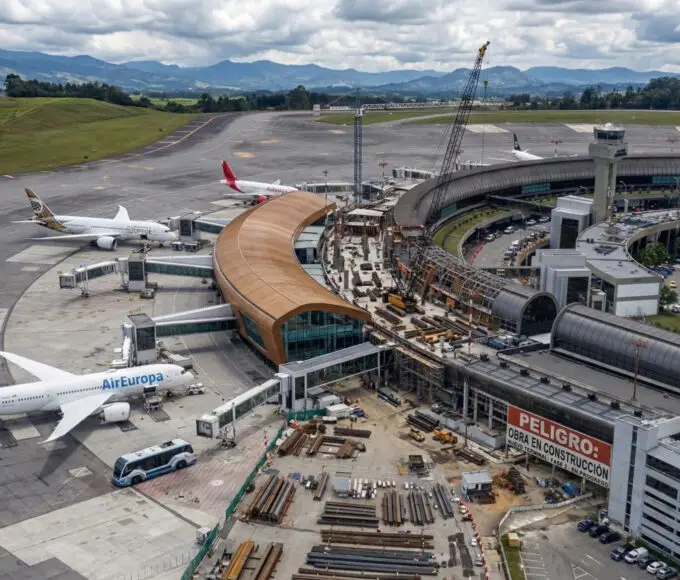
The Medellín airport is finally going to be expanded... What now?
If you've been reading my articles for a while, you know that lately (on the contrary...
blackroom.com.coMarch 28, 2026 
The mistake no one wants to admit: Medellin builds more hotels than it can fill
What “El Colombiano” fails to see Today I read the column...
Alejandro Gonzalez UribeFebruary 12, 2026 


Hotel oversupply in Medellín. More tourists does not mean more reservations.
Let's make one thing clear: Medellín is not empty. Nor did it cease to be...
Alejandro Gonzalez UribeDecember 22, 2025 