




Rate war: This happens when Medellín becomes flooded with hotels and Airbnbs without any control.
 Alejandro Gonzalez UribeSeptember 11, 20257 Mins read
Medellín continues to grow, but the market has changed
Hotels in Medellín are not complaining about a lack of tourists. On the contrary, official figures show that the city could close 2025 with 1.8 million visitors. In the first half of the year alone, 954,632 tourists arrived through José María Córdova Airport, representing a 12.41% increase over the same period in 2024. There was also a strong boost in international promotion, especially in July, when overnight stays doubled thanks to investment by ProColombia and specific campaigns led by online travel agencies, which reported a 181% increase in accommodation revenue.
Visitors are arriving. Flights are filling up. Reservations are moving. But this growth in demand has not translated into better results for all hotels and Airbnbs in the city. The general perception among operators is that “we are doing well, but it is not the same as in previous years.” And the reason is simple: supply has grown faster than demand, and competition has intensified. The number of beds available in the city has skyrocketed, new hotels and Airbnbs are constantly opening, and the market dynamic has shifted toward a daily struggle to attract the most price-sensitive customers. The market is active, but more demanding. It is no longer enough to be open: now you have to be relevant, efficient, and competitive to stand out.
The hotel gold rush and the chaos of oversupply
Between 2020 and 2022, Medellín experienced unprecedented growth in the accommodation market. The high immediate profitability post-pandemic generated a “gold rush” that led numerous builders and independent actors to enter the business, often without preparation or advice. The city went from having 436 active hotels in 2021 to an estimated 565 projected for 2025. In the last three months alone, 22 new hotels opened in Medellín.
At the same time, the rise of platforms such as Airbnb led to Medellín going from 5,000 to more than 19,000 tourist properties in 2024, which distorted the market. Many owners entered the market unprepared, driven by expectations of easy profits, affecting both the perception of the destination and competition with formal hotels.
Today, there are only about 9,000 active tourist properties in the city, reflecting a reduction in inventory and a structural change in the informal supply. However, the cumulative impact remains: Medellín has more than 40,000 beds available between hotels and tourist accommodations, which has saturated its installed capacity.
Average occupancy fell to 60.21% in the first half of 2025, far from the occupancy peaks of 2022 and 2023. The market no longer rewards bed scarcity and now demands strategy, differentiation, and operational efficiency. It is no longer enough to simply be there: you have to stand out.
The tariff war as a reflection of desperation
Competition in the accommodation market is no longer solely based on location, design, or quality of service. Today, it is primarily a price war. Medellín is divided into areas with clearly differentiated price ranges: Provenza and El Poblado represent the high-end segment; Laureles, the mid-range; and the city center, the low-end. However, downward pressure on prices is widespread. When high-end hotels in Provenza reduce their rates to attract demand, they force the entire ecosystem to readjust prices downward.
Something we have seen in El Poblado during high-demand events such as the Flower Fair are new hotels with modern standards and prime locations that entered the market with introductory rates of just COP 180,000. This phenomenon shows that competitive pressure no longer distinguishes between category or location: everyone is competing to maintain occupancy, even if it means sacrificing profitability. This has led to a situation in Laureles, for example, where it is common to see hotels with good facilities offering rooms for 155,000 COP, while others, without air conditioning, drop to 130,000 COP. The logic is clear: when high-end hotels lower their prices, they force the entire city to readjust. The rate war is now a cross-cutting condition of the market.
In addition, the strategy of lowering prices during the low season has become a widespread reaction, fueled by the desperation to secure occupancy. But this short-term reaction is eroding profitability.
Investor pressure
Many projects were sold with occupancy projections of 65-70% and average rates of COP 340,000. In some cases, these figures were backed by serious studies, market analysis, and developers with experience in the sector, who planned their product from the design stage through to operation. But in other cases, the story was very different: many simply built hotels without financial models or market studies, and went out promising the same profitability figures without having any way to back them up. They did not look for an operator during the development stage, but only once the hotel was already built, often without considering whether the design or location corresponded to the target segment.
The result is contradictory: well-conceived products, with coherent design, location, and operation, are struggling to maintain expected rate ranges due to the price war created by hotels built without any financial model or demand analysis, created under the logic that “tourism is in vogue.” Many of these were created without a defined operator, opening plan, or positioning strategy. The consequence is a profound gap between what was expected and what the market is currently showing.
This internal pressure causes many operators to opt for low-cost volume strategies, which further degrades the market. In other cases, they are forced to give up the business, sell assets, or even close down. The “natural selection” of the market is already being felt. As happened in Bogotá a decade ago, some hotels are being liquidated or converted into apartments.
Global brands and the redefinition of the competitive standard
Amidst the chaos, global brands arrive. And they don't come to explore: they come to compete. Hilton is building a new hotel in the city. Mama Shelter (Accor) enters with 150 rooms, an 800 m² rooftop, coworking, and events. Wake BioHotel, with a $35 million investment, promises to be the first longevity hotel in Latin America. Click Clack Wellness and Swiss Hotel are also joining this transformation, with proposals that raise the competitive standard and target a more demanding guest profile.
These brands not only bring global marketing, loyalty programs, and established distribution networks. They also raise the bar in every operational aspect: from consistency in service and design to the guest experience. To compete in this environment, it is no longer enough to simply be on the map. Now, a clear value proposition, solid positioning, and efficient operations are required. Competition is based on reputation, differentiation, and the ability to maintain international standards.
In addition, these brands have the potential to attract new segments of tourists who previously did not consider Medellín as a destination. Their arrival validates the destination internationally, but also redistributes the local market: they will inevitably take a considerable share of the pie. The sector's hope is that this new standard will help raise average rates in the city, rather than further intensifying the price war.
The result is a new scenario: competing solely on price is unsustainable.
Efficiency and value: the formula for success
The fact that we are in a price war in Medellín does not mean that the entire sector is doomed, far from it. There are many hotels in Medellín that are doing very well, and there is still room for new hotels that understand the business and know how to play the game. Projects with a defined niche, which differentiate themselves by perceived value beyond selling a bed and a bathroom, will be able to generate very good margins without having to enter the race to lower prices. Those that were designed with operational efficiencies from the outset, prepared to withstand low seasons without drowning in discounts, will also be better off when all this is over, because the market will stabilize in the medium term.
Similarly, hotels located in strategic areas, designed to be attractive with competitive rates and controlled costs, show that it is possible to compete strongly even in a saturated market. In addition, projects that are just in the sales stage, if they were planned realistically and with a concept tailored to actual demand, can become successful hotel or Airbnb projects.
Patience, vision, and professionalism: what really works
The disorderly expansion of hotel beds and Airbnb in Medellín brought with it improvisation. Many entered the business without a strategy, without research, without serious operations. They believed it would be easy. And today, they are causing everyone, including those who did their job well, to face the consequences.
Medellín continues to be a city with great opportunities for tourism. Tourists continue to arrive. But the market no longer forgives mistakes. Competition has become structural. Seasonality is real. And the business has become more technical than emotional.
Players who took the exercise seriously, with a long-term vision and the patience to wait for the market to stabilize, are the ones who will endure. On the other hand, those who did not seek advice, did not involve an operator from the development stage, and built in less than optimal locations will end up affecting themselves and others. In the short and medium term, these projects will have to undergo profound changes or disappear, and that is good news.
It is important to make it clear that tourism is by no means collapsing; what is coming is the consolidation of an industry that will become increasingly demanding and adopt better practices. Medellín is no longer just an attractive destination; it is on its way to becoming a sophisticated hotel market, where those who focus on quality, added value, and operational and financial professionalism have a clear path to building a solid and sustainable business. Even in the midst of adjustment, there is room for well-thought-out projects with a good value proposition. What is changing today is the logic of the business: you no longer win just by being there, you win by doing things better.
Alejandro Gonzalez
Co-founder of Blackroom






Related Articles

The perfect storm in Medellín's hotel industry
I want to start this column by stating the obvious; that in every business...
 blackroom.com.coMay 7, 2026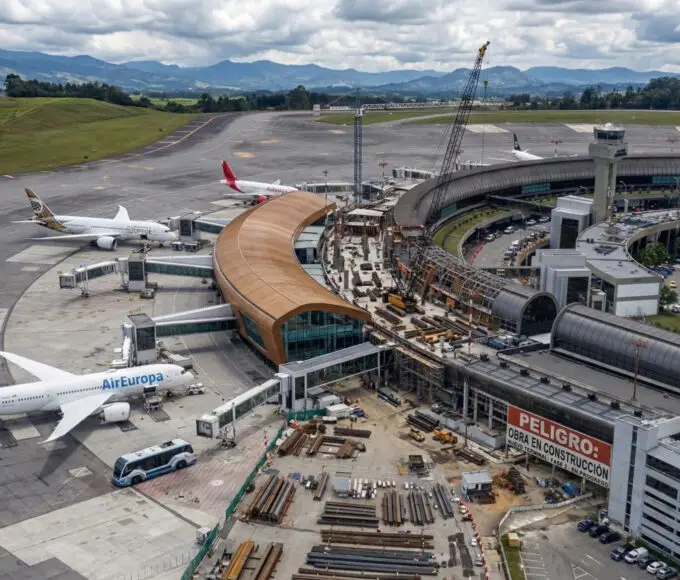
The Medellín airport is finally going to be expanded... What now?
If you've been reading my articles for a while, you know that lately (on the contrary...
blackroom.com.coMarch 28, 2026 
The mistake no one wants to admit: Medellin builds more hotels than it can fill
What “El Colombiano” fails to see Today I read the column...
Alejandro Gonzalez UribeFebruary 12, 2026 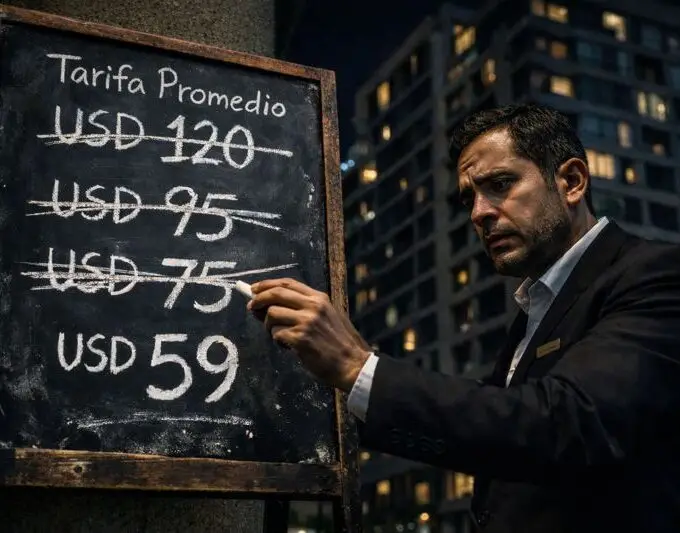


Hotel oversupply in Medellín. More tourists does not mean more reservations.
Let's make one thing clear: Medellín is not empty. Nor did it cease to be...
Alejandro Gonzalez UribeDecember 22, 2025 