




The perfect storm in Medellín's hotel industry
 blackroom.com.coMay 7, 20268 Mins read
I want to start this column by stating the obvious; that in every business and in every industry there are always, and there will be at some point in time, bad months and also good months. Having said that... sometimes and only sometimes, there are months when you feel that the universe, fortune, the weather, politics and even numerology all decide to turn against you at the same time.
That is exactly what I feel is happening today to the hotel industry in Medellín.
I do not want it to be understood that Medellin has ceased to be attractive, nor that tourism is over, far from it. I say this because in a city that has been oversupplied for some months and that is sensitive in rates, several external factors have come together at the worst possible time, complicating the stability of business just when more and more new rooms are coming on the market to fight for the same guests.
April and May and even the beginning of June are known by the trade as the low season months in Medellin. We all know that in this industry. These are the months between the strongest seasons, when it is time to look for efficiencies, take better care of the rate, move more commercially and make fewer mistakes... that is normal. The problem is that this year the low season was accompanied by an uncomfortable country context, a more fragile international perception and a much more aggressive commercial pressure... A Perfect Storm.
April and May were already complex. This time they became heavy
If you look at the historical occupancy behavior of Medellin, April, May and even June have always shown to be months of lower traction compared to other times of the year, and there was a slowdown this year vs. previous years due to factors such as oversupply (which you should be aware of if you have read my previous articles)... And just when you think that nothing can be worse, the universe takes care of showing you the opposite.
To add to the low season and the oversupply with fare pressure, in the last months and weeks, Colombia returned to the horrible 90’s, to being a victim of attacks and violence, with a security agenda practically null that when one lives to sell perception, confidence and desire to travel, they become a stone in the shoe the size of the Peñol stone.
And if we add to that the political climate and media noise, it's like pouring gasoline on a bonfire. For us it may be part of the daily landscape, but for an international traveler it is not. The tourist does not distinguish if an attack happens thousands of kilometers away from the city he is going to visit, the tourist sees a feeling of an insecure and violent country. And when that feeling contaminates the mind, the intention to buy becomes slower, much more sensitive to price or may even make the tourist reconsider his trip altogether.
This is a tough diagnosis, but a necessary one
It must be said as it is: this may be one of the hardest times for the hotel industry in Medellín in its recent history. And I'm not saying this for the sake of drama, I'm saying it with a hard and realistic diagnosis. It is one thing to have a weak month within the normality of the seasonal situation and the oversupply of new hotels coming into operation, and quite another to have a weak month that also has to deal with the country's violence, political noise, the deterioration of international perception and more new competition that means having operators coming out to break even as quickly as possible.
In tourism, perception matters almost as much as reality. That is why a travel alert issued by the United States weighs a lot, even if it is not a ban to come to Medellin. It is enough for the main issuing market to say: “reconsider travel”, for part of the demand to hesitate, postpone or change their plans. The good thing is that these alerts do not always result in massive cancellations. But they often result in something just as uncomfortable: less speed in booking, less anticipation and more fare pressure.
The departure of Plus Ultra and the increase of up to 25% in airline tickets
The news that Plus Ultra has stopped operating in Colombia since June and the increase in airfares due to the conflict in the Strait of Hormuz speak to the fact that operating in Colombia is becoming more difficult, more costly and more sensitive to competition. Airlines talk about the increase in fuel costs, taxes and operational structure, making it clear that many times it is not possible to pass on the cost to the passenger, which is another sign of pressure on the country's connectivity ecosystem.
And when such a signal appears in the middle of a historically low season, what it does is worsen the tourist's mood, reinforce the narrative that it is not the time to travel and remind them that there are other interesting destinations as well.
All this while hundreds of rooms continue to come in with rates through the floor.
Between 2025 and 2026, close to 1,000 new rooms have entered the market and several projects are still under construction, representing an additional 10% of inventory. This supply does not come to the market at an expansive moment. It is coming to market at a tight time, and at one of the most sensitive times of the year.
The most delicate thing is not only that rooms are coming in. The tricky thing is the way many of them are coming in to sell. Already today you see new properties with very aggressive rates, deep discounts, floor rates, breakfast included, flexible cancellation and all kinds of incentives to close a booking quickly. And when that happens with new high-volume hotels, there is a domino effect where the traditional ones have to lower their rates to compete and the entire market rate breaks.
So much so that some assets have been forced to join international chains, seeking tariff stability and an international reputation that will guarantee them a certain level of occupancy, putting more pressure on others.
Although the arrival or conversion of projects under brands such as Curio Collection by Hilton, Radisson Individuals or Marriott's Design Hotels raises the commercial and operational standard of the city, is good for Medellín in the long term, in the short term it means having more sophisticated competition “stealing occupancy” at a time when almost everyone is trying to defend occupancy without destroying their rate.
How the perfect storm was created
If one takes each factor separately, none should generate what is happening today. Low April and May alone do not explain this level of pressure. Neither the recent violence, nor the U.S. alert, nor the departure of Plus Ultra and the increase in airfares, nor the new rooms coming in at aggressive rates, by themselves, would generate what is happening today. The problem is that all of this is happening at the same time.
And as icing on the cake of complex situations, I dare to add what the World Cup will generate in a few months, which on the one hand may cause people to go to Mexico, the United States or Canada instead of traveling to Colombia to enjoy the World Cup, or even decide not to travel during all that time to watch it at home with their friends and family... something that I see as more likely and that would put more pressure on occupancy and rates.
When an oversupplied market is combined with weak seasonality, bad country news, elections, more expensive flights, new competitors breaking rates and on top of that a FIFA World Cup, what appears is a perfect storm. One of those in which you quickly understand that it's not about being optimistic to win, it's about whoever executes best under pressure to hold on and come out unscathed...
In storms like this, calm and well-made decisions are everything.
When a ship's captain faces a storm that he cannot get out of, the first thing he does is to ensure the internal stability of the ship so that the chaos outside does not destroy it from the inside. First, he sorts out all of the ship's cargo, because he knows that a loose heavy object can be more dangerous than an external wave, then he positions the bow (the front of the ship) toward the biggest waves, facing the problem head-on to cut it off rather than allowing it to crash sideways and flip his ship. He then adjusts the engine power to the minimum necessary to maintain motion and preserve power.
In the end, he avoids his obsession with reaching his final destination and concentrates solely on staying afloat, accepting that at the most critical point of the crisis, the only mission that matters is to hold on until the sea decides to calm down. I've been thinking a lot about that story these days, because that's exactly what I feel many hotels in the city should be doing. What is required today is resilience, discipline and a cold reading of what can be controlled.
The truth is that when external factors are uncontrollable, the only thing left to do is to adjust better, take better care of the operation, monitor each channel, protect the cash flow, review rates intelligently and be aware of every detail.
After the storm, comes the calm.
I started by saying that all businesses and industries have bad months, I also said that I did NOT want it to be understood that Medellin has ceased to be attractive, nor that tourism is over, far from it. It has to be clear that we are still a city with high tourist potential and a lot of growth potential, if it were not so, the big international hotel brands would not be entering the city... I want that to be very clear.
As there are bad moments we have lived good moments and we will live them again. An expansion of our airport is coming and has already begun, our mayor invests heavily in security and infrastructure, everyone who comes to our city falls in love with it, so much so that sometimes we have to force them out. They say that the darkest moment is just before the dawn or that after the storm comes the calm, with all confidence the political situation will improve and security will also improve, the dilemma over oil will be adjusted and even the World Cup will make us all change our countenance and unite as a country.
Surely there will be hotels that will not be able to weather the storm, just as there will be others that will and will continue to do a great job and offer great service. In months like these, emerging victorious doesn't always mean growing. Sometimes it means weathering the storm better than others and keeping calm while the storm passes.
Alejandro Gonzalez
Co-founder Blackroom Hotel Operator




Related Articles
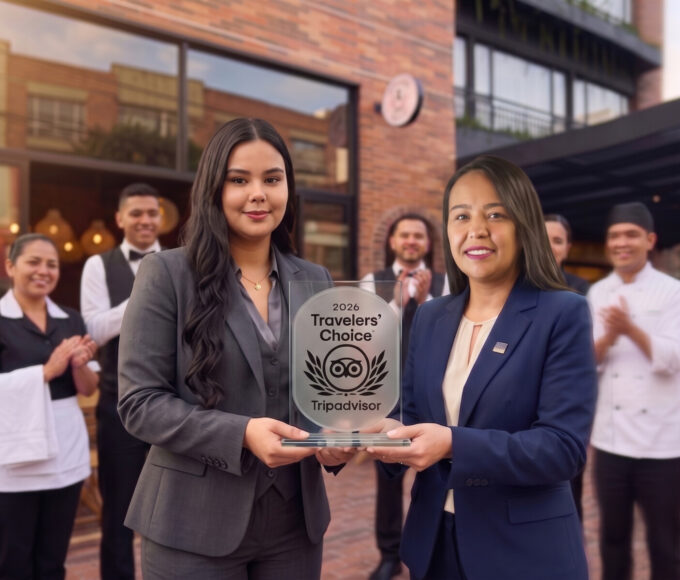
We are ranked 101st in TripAdvisor's list of the world's best hotels
To start this article, I’d like you to think about the last time...
blackroom.com.coJune 11, 2026 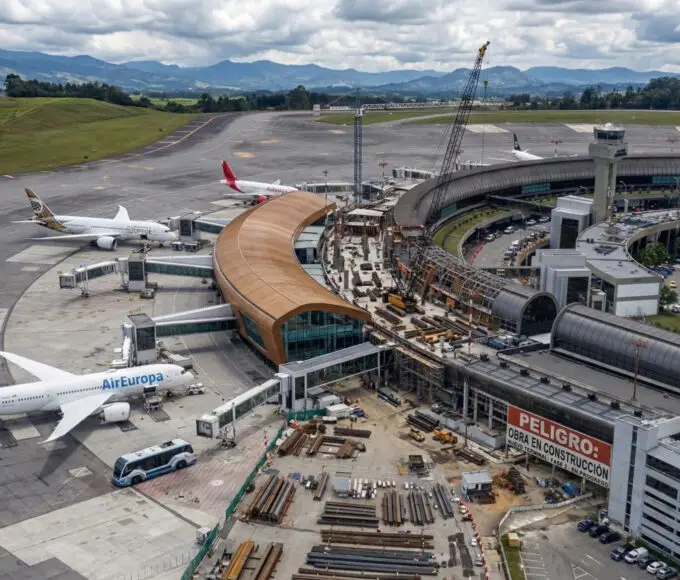
The Medellín airport is finally going to be expanded... What now?
If you've been reading my articles for a while, you know that lately (on the contrary...
blackroom.com.coMarch 28, 2026 
The mistake no one wants to admit: Medellin builds more hotels than it can fill
What “El Colombiano” fails to see Today I read the column...
 Alejandro Gonzalez UribeFebruary 12, 2026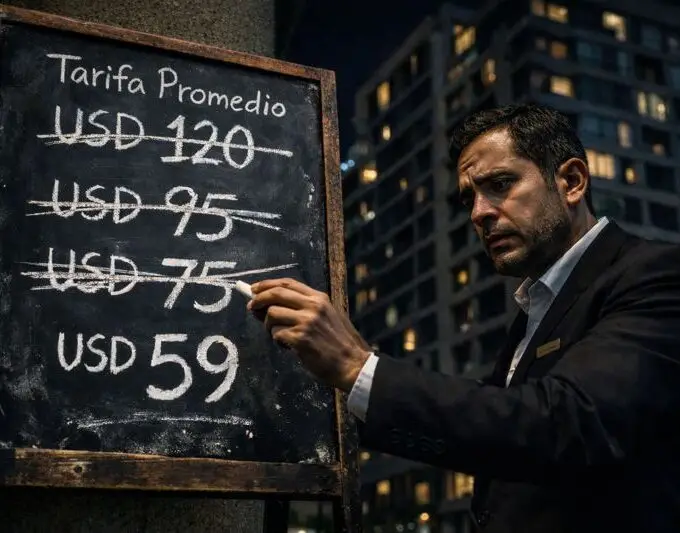


Hotel oversupply in Medellín. More tourists does not mean more reservations.
Let's make one thing clear: Medellín is not empty. Nor did it cease to be...
Alejandro Gonzalez UribeDecember 22, 2025 
Leave a comment